
![Adjustable Focus Low Voltage Spotlight for Landscape Lighting [Brass]](http://www.lightkiwi.com/cdn/shop/files/C4573-1.jpg?v=1744152299&width=2000)
![Adjustable Focus Low Voltage Spotlight for Landscape Lighting [Brass]](http://www.lightkiwi.com/cdn/shop/files/C4573-2.jpg?v=1744152299&width=2000)
![Super Efficiency Flood Light & Wall Wash for Low Voltage Landscape Lighting [Brass]](http://www.lightkiwi.com/cdn/shop/files/R9872-1.png?v=1750210440&width=2000)
![Super Efficiency Flood Light & Wall Wash for Low Voltage Landscape Lighting [Brass]](http://www.lightkiwi.com/cdn/shop/files/R9872-2.png?v=1750210439&width=2000)
![Splendid Flood Light & Wall Wash for Low Voltage Landscape Lighting [Brass]](http://www.lightkiwi.com/cdn/shop/files/H9917-1.png?v=1750216134&width=2000)
![Splendid Flood Light & Wall Wash for Low Voltage Landscape Lighting [Brass]](http://www.lightkiwi.com/cdn/shop/files/H9917-2.png?v=1750216134&width=2000)
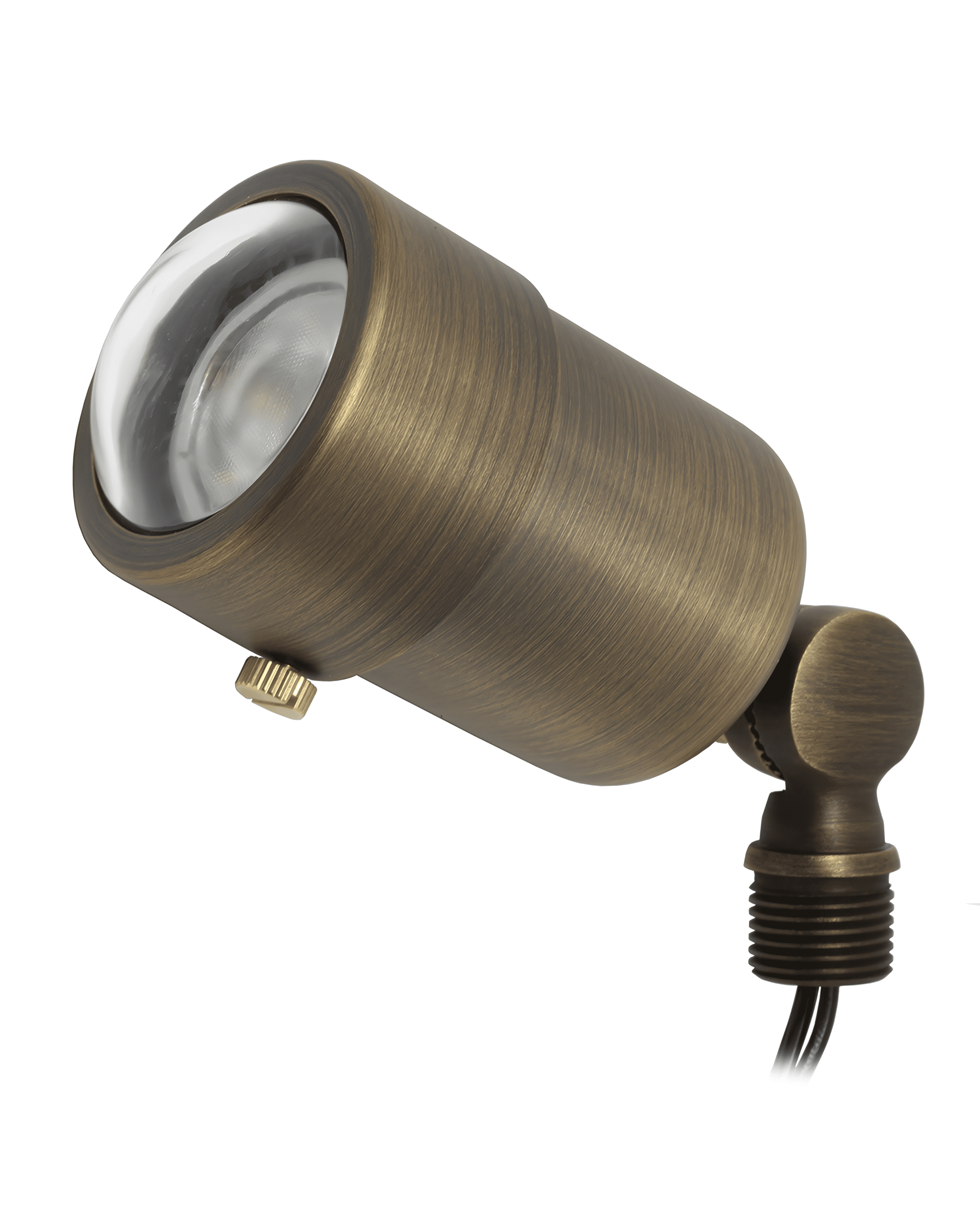
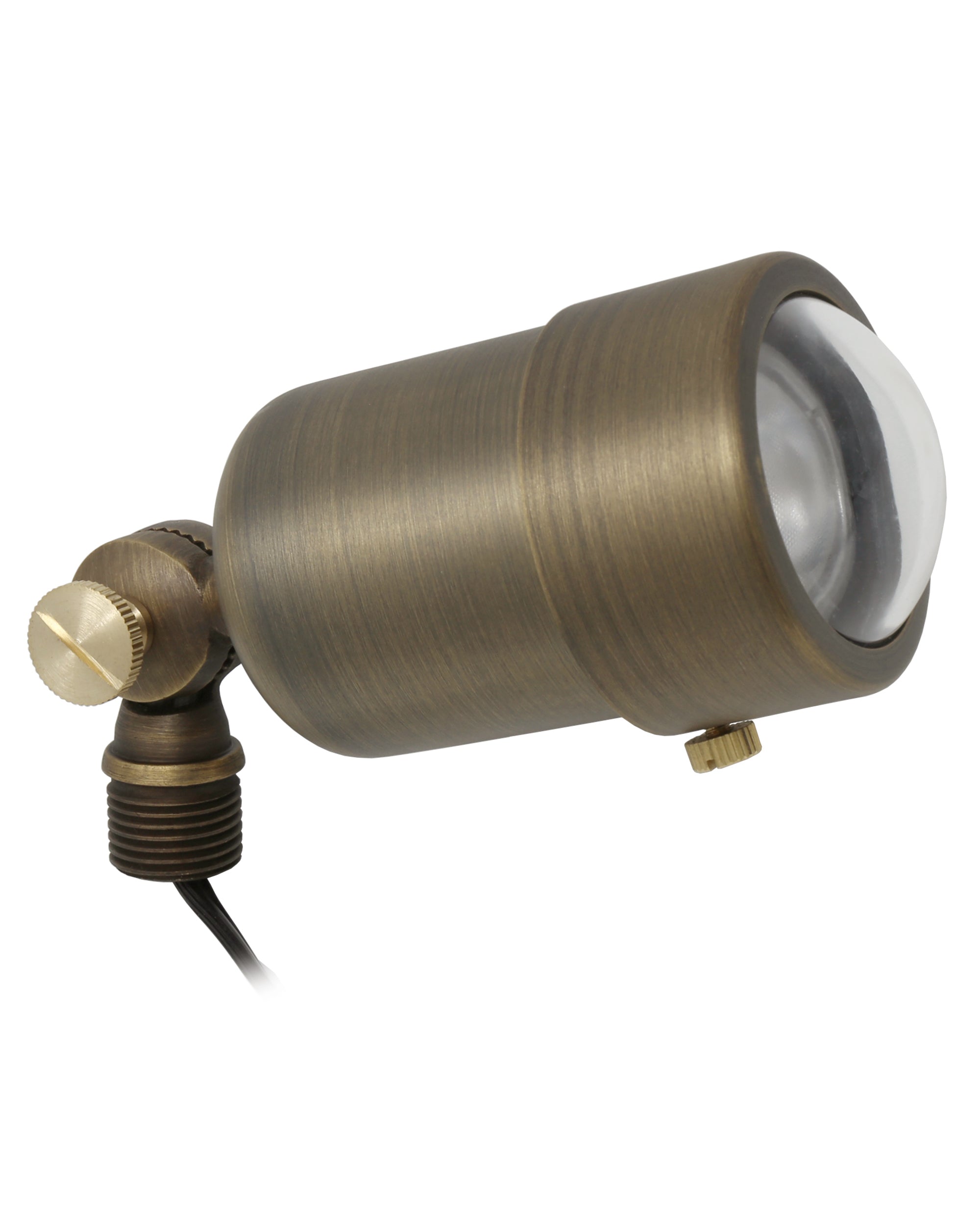
Lightkiwi's brass landscape spotlights and flood lights bring professional-grade outdoor lighting to any residential landscape. All fixtures are constructed from heavy-duty cast brass for long-term weatherproof durability, and run on 12V low voltage — compatible with all Lightkiwi transformers and existing landscape lighting wire. Bulbs are sold separately, giving you full control over brightness, color temperature, and beam angle.
Spotlight vs. Flood Light — Which Do You Need?
Spotlights produce a focused, directional beam designed to highlight a specific feature — a tree, shrub, statue, column, or architectural detail. The beam stays concentrated rather than spreading wide, creating a dramatic accent effect.
Flood lights produce a wide, spreading beam that covers a larger area — ideal for wall wash lighting, illuminating broad garden beds, or lighting up a wide facade. The same bulb produces a noticeably different effect in a flood light housing because the larger reflector spreads and amplifies the light.
When to use both: Most residential landscapes benefit from a mix. Use spotlights to highlight focal points — the tree by your front door, a stone column, a garden sculpture. Use flood lights to wash broader areas with ambient light — a garden wall, a hedge line, or the face of your home.
Choosing the Right Fixture
C4573 — Adjustable Focus Spotlight
The most versatile spotlight in the lineup. The adjustable focus collar lets you dial the beam from narrow to wide after installation — no need to reposition the fixture if you want to change the effect. Accepts MR16 GU5.3 bulbs. Includes ground spike. Best for: accent lighting on trees, shrubs, statues, and architectural features where you want precise control.
S1997 — Macro Landscape Spotlight
A wider-angle spotlight without an adjustable focus collar. The fixed wide beam spreads light more broadly than the C4573, making it a good middle ground between a tight spotlight and a full flood light. Accepts MR16 GU5.3 bulbs. Includes ground spike. Best for: lower-profile plants, garden beds, and features where a softer, broader uplight is preferred.
R9872 — Super Efficiency Flood Light & Wall Wash
A compact flood light with a wide, spreading beam pattern. The reflector housing amplifies and spreads the bulb's output for broader area coverage. Accepts MR16 bulbs. Best for: wall wash lighting, illuminating wider garden areas, and driveways where broad coverage matters more than focus.
H9917 — Splendid Flood Light & Wall Wash
The larger version of the R9872 with a bigger reflector that produces a noticeably brighter, wider wash of light from the same bulb wattage. The larger housing amplifies light output more effectively, making it the right choice for larger walls, wider facades, or any application where maximum spread and apparent brightness are the priority.
Choosing the Right Bulb
All four fixtures accept MR16 GU5.3 bi-pin bulbs at 12V AC. Bulbs are sold separately
— here's how to choose:
Beam angle:
- Narrow (24°) — tight, dramatic beam for accent spotlighting
- Medium (36°) — versatile, works for both spotlights and smaller flood applications
- Wide (60°) — broad coverage for flood lights and wall wash
Wattage: 3W–5W LED for most residential applications. 7W–10W for larger trees, longer throw distances, or brighter effects.
Color temperature:
- 2700K–3000K warm white — soft, natural, inviting. Most popular for residential landscapes.
- 4000K cool white — crisp, modern, high-contrast. Better for contemporary architecture and where visibility matters more than ambiance.
Compatibility
All Lightkiwi spotlights and flood lights run on 12V AC low voltage. Connect directly to your Lightkiwi transformer and existing landscape wire using waterproof snap connectors (sold separately). Compatible with all Lightkiwi 75W, 150W, 300W, and 600W transformers.
With 5W MR16 LED bulbs, each fixture draws 5W. A 150W transformer (120W usable at 80%) powers up to 24 fixtures. Most residential installs use 4–8 spotlights or flood lights per transformer zone.

Frequently Asked Questions
Do these fixtures come with bulbs?
No. All Lightkiwi spotlights and flood lights are sold without bulbs. Purchase 12V MR16 GU5.3 bi-pin LED bulbs separately. This lets you choose your preferred beam angle, wattage, and color temperature.
What is the difference between a spotlight and a flood light?
A spotlight focuses light into a narrow, directed beam — ideal for highlighting specific features. A flood light spreads light broadly across a wider area — better for wall wash and ambient coverage. The C4573 spotlight's adjustable focus also lets it approximate a flood effect when set to its widest beam setting.
Can I install these myself?
Yes. All fixtures operate on 12V low voltage — no electrician required. Push the ground spike into the soil, run the lead wire to your landscape lighting wire, and connect with waterproof snap connectors. Adjust position and beam angle with the light on until you achieve the desired effect.
How do I control these fixtures?
Control is managed at the transformer level. Add the Lightkiwi [Digital Timer](https://www.lightkiwi.com/products/digital-timer-for-low-voltage-landscape-lighting-transformer) or [Photocell](https://www.lightkiwi.com/products/l6709-photocell-for-low-voltage-landscape-lighting-transformer)
for automatic scheduling. Add the [WiFi Smart Plug (https://www.lightkiwi.com/products/e2683-wifi-smart-plug-low-voltage-landscape-lighting-transformer) for app.
Will the brass finish rust or corrode?
Solid brass does not rust. It will develop a natural patina over time as it weathers — darkening gradually from bright brass to a deeper, warmer tone. This is normal and expected for solid brass outdoor fixtures. To maintain the original finish, apply a clear outdoor lacquer periodically.
How far should I position the fixture from the target?
For uplighting trees and shrubs, position the fixture 1–3 feet from the base of the plant and angle upward. For wall wash, place 2–4 feet from the wall surface. Adjust with the light on — the optimal position depends on the size of the feature and the beam angle of your bulb.