
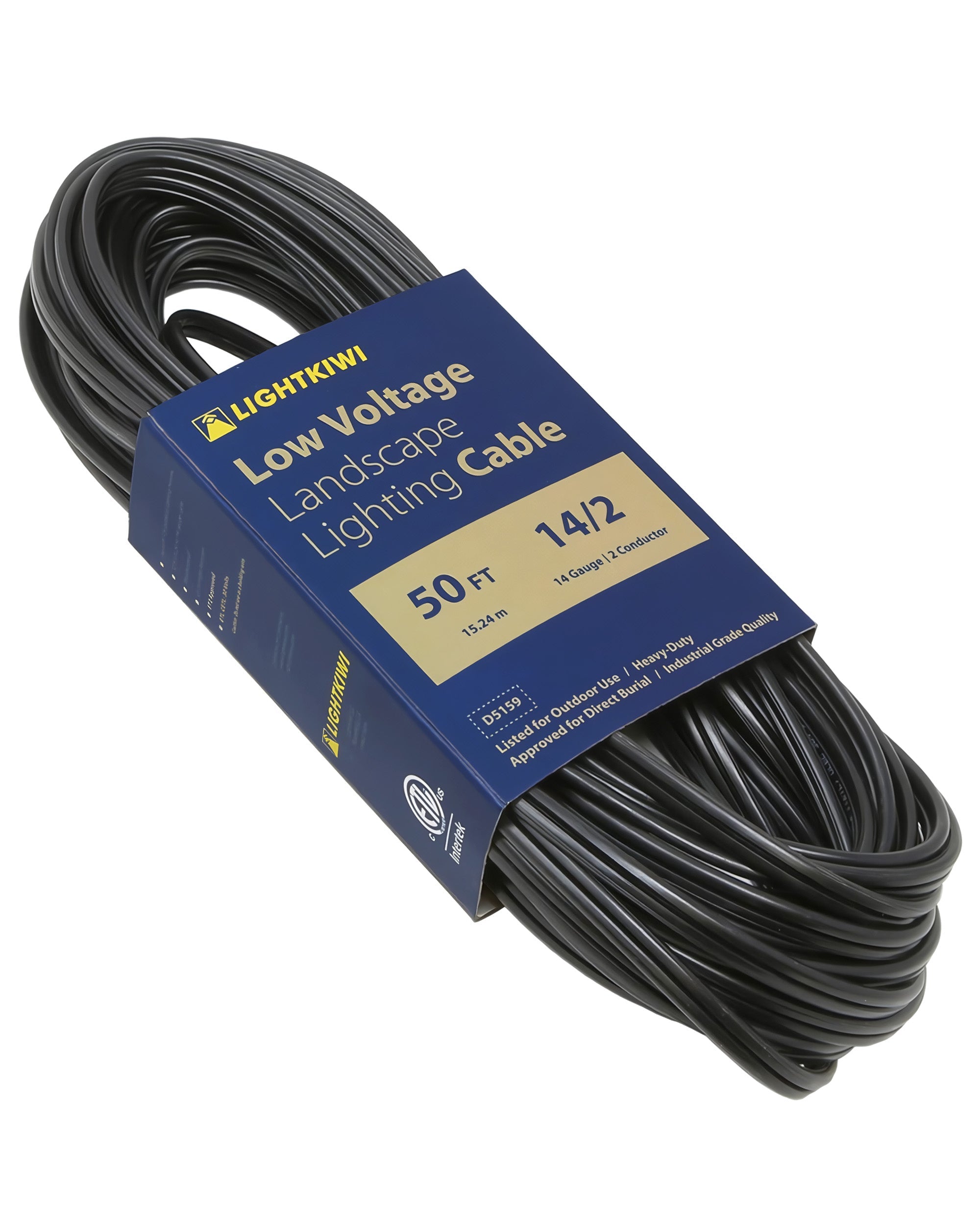
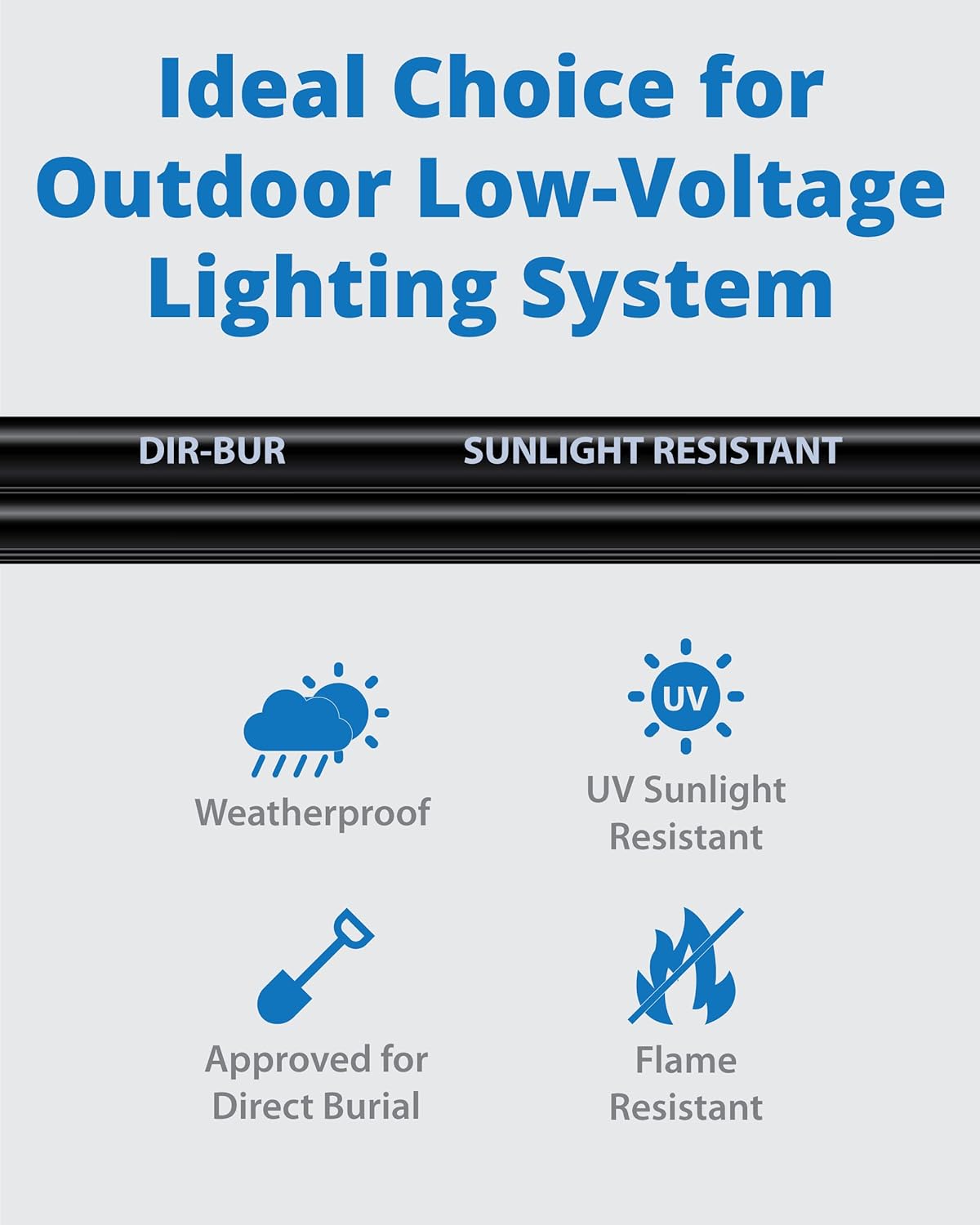
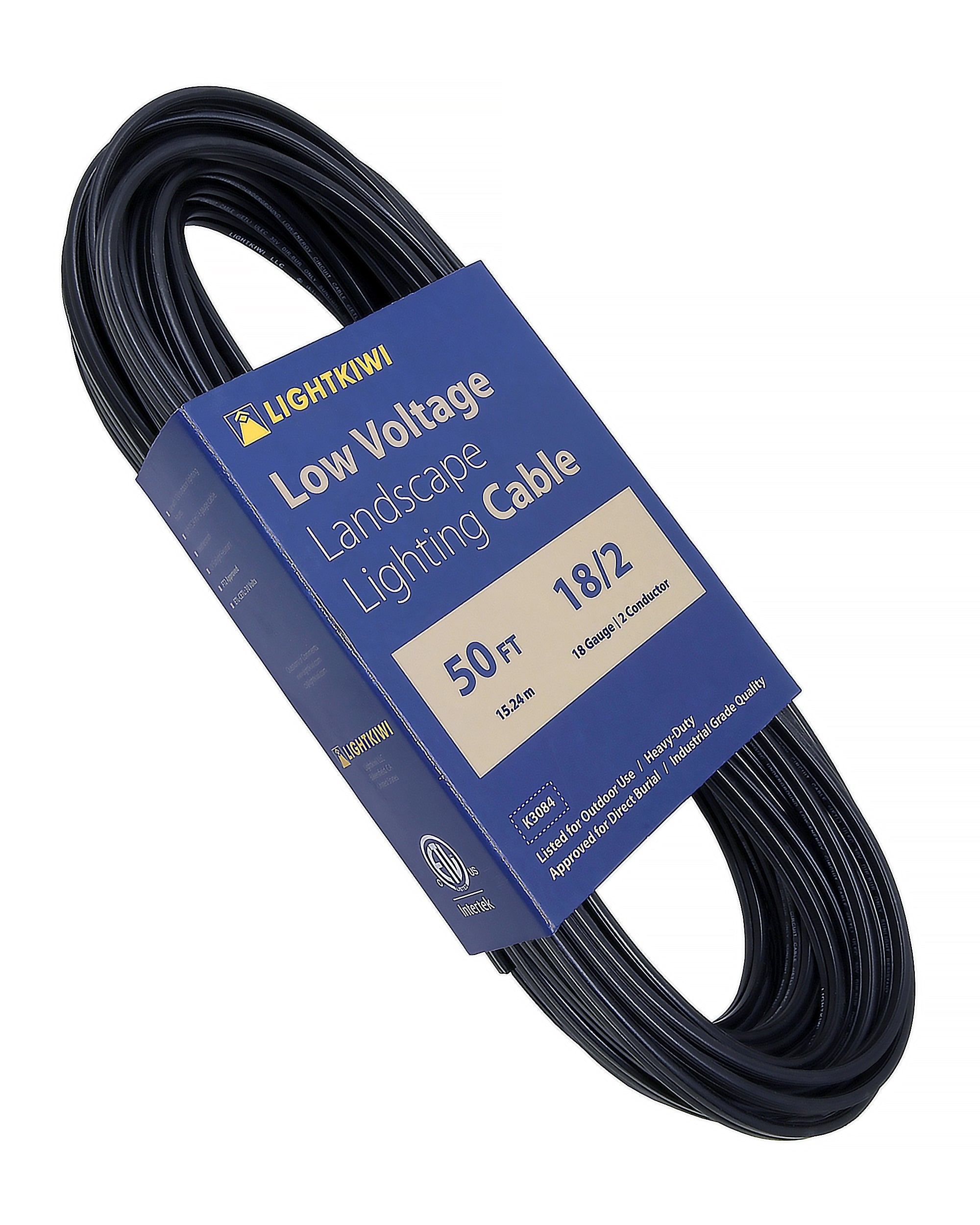
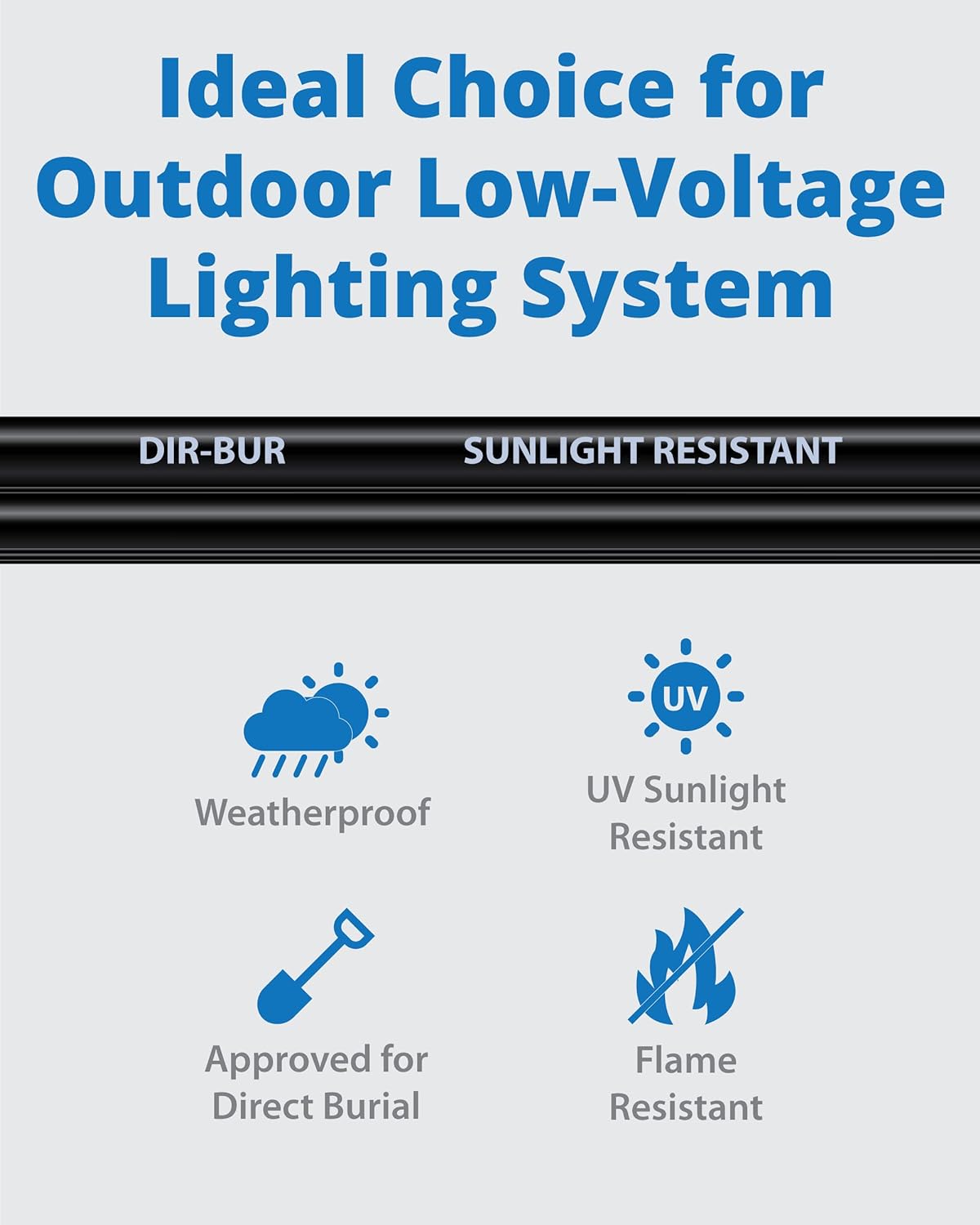
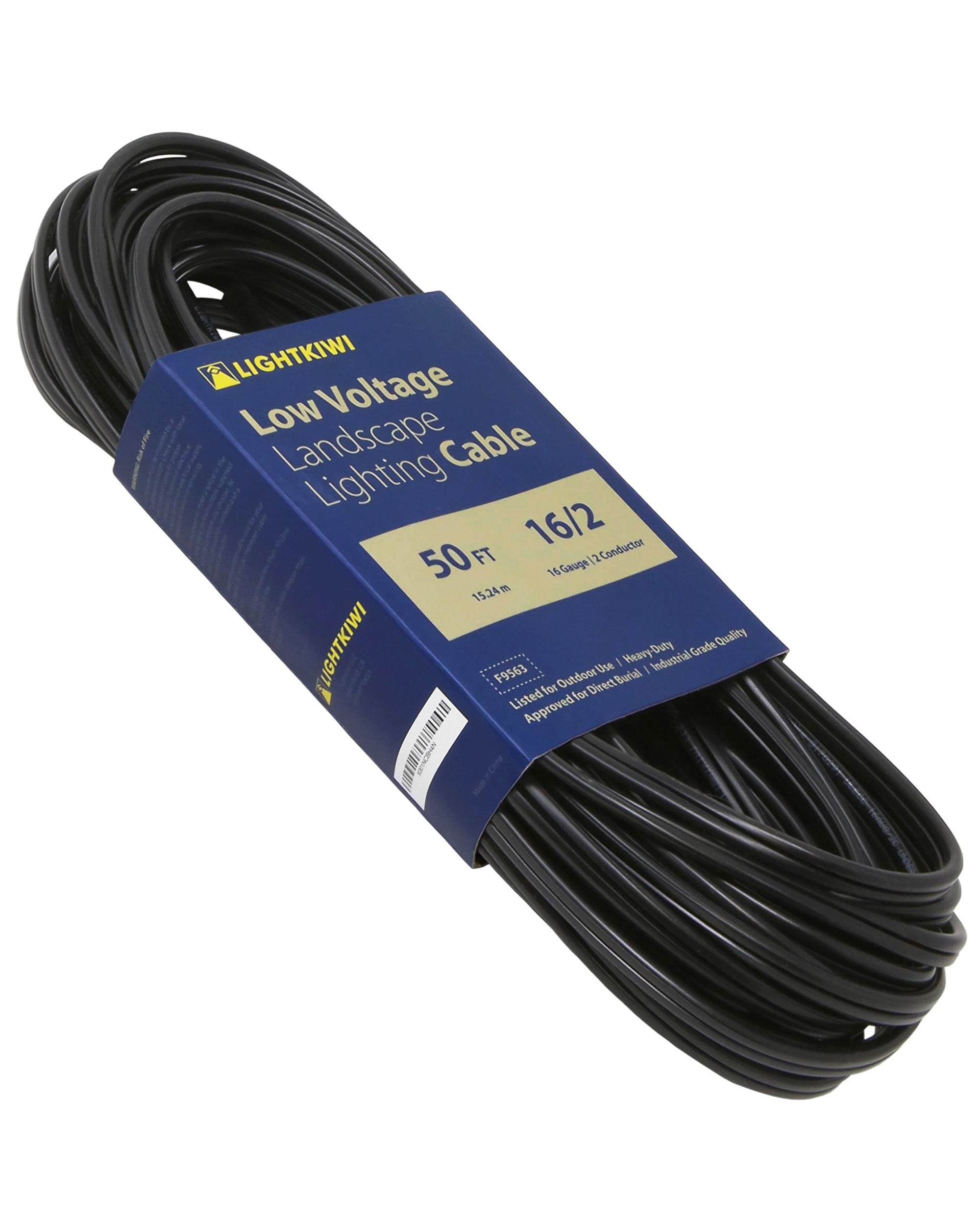
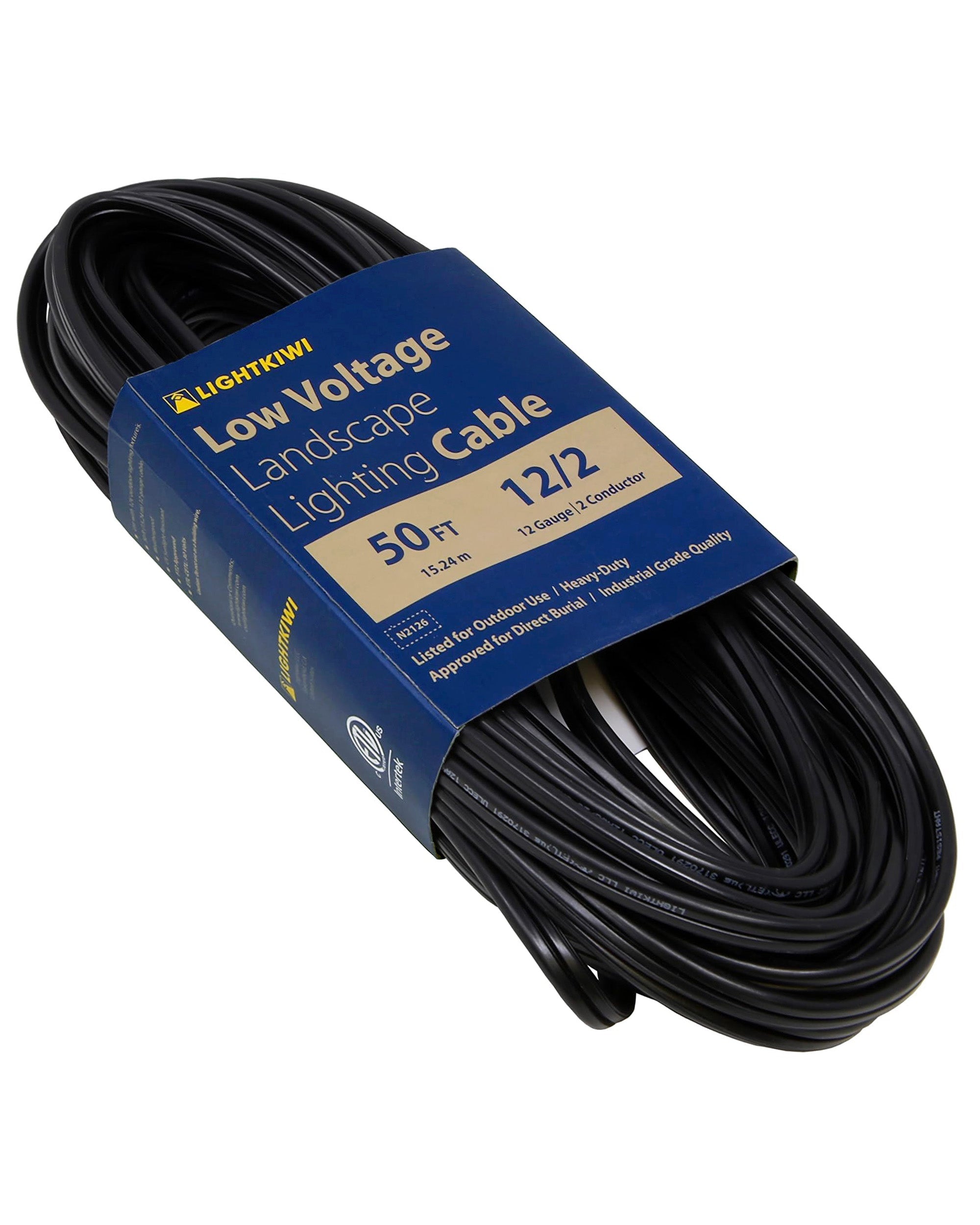
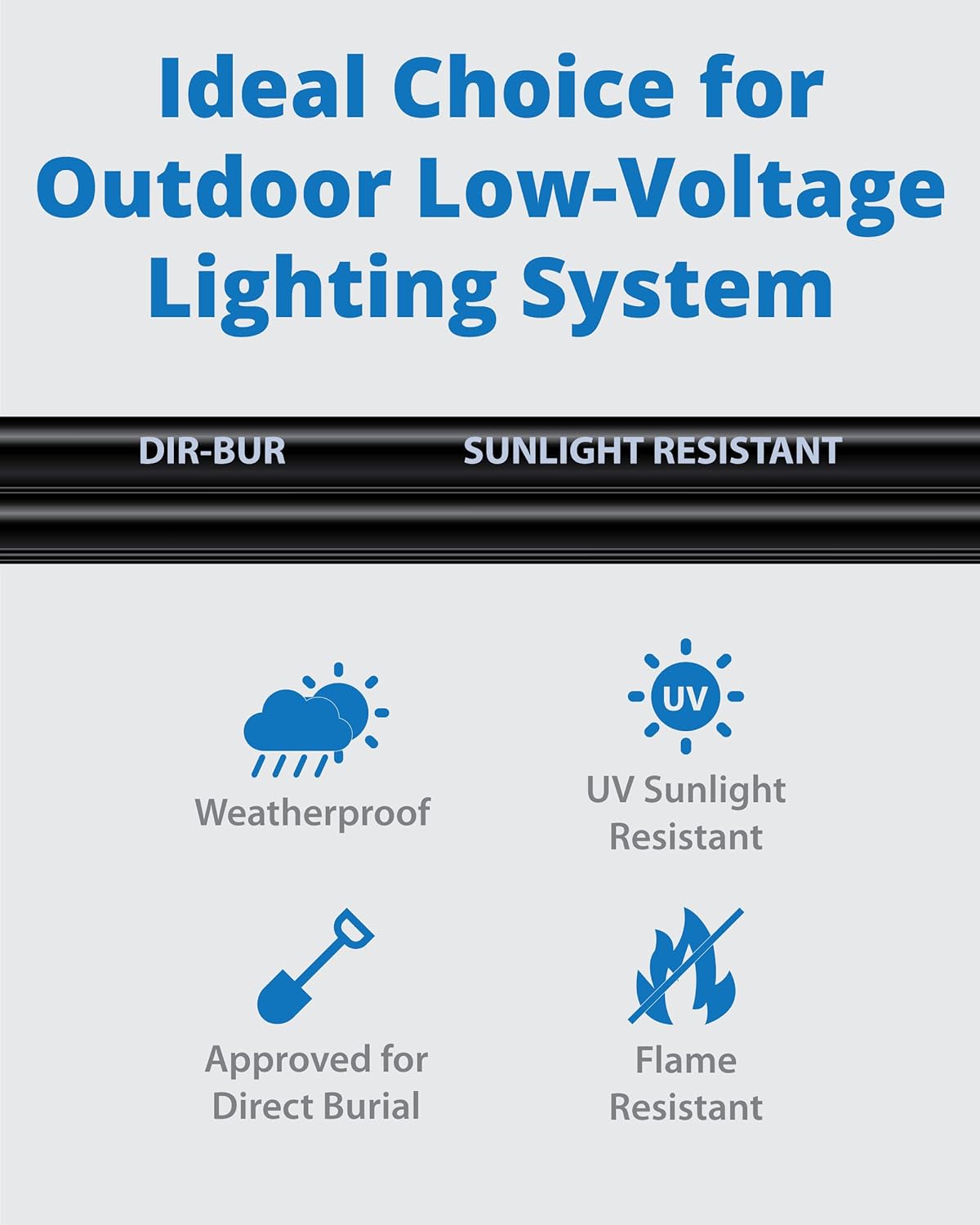
Lightkiwi 50ft landscape wire spools are the right choice for shorter runs, system add-ons, and filling in gaps in an existing low voltage lighting installation. All Lightkiwi landscape wire is 100% pure copper — not CCA (copper-clad aluminum) — for better conductivity, less voltage drop, and longer service life. Available in 12/2, 14/2, 16/2, and 18/2 gauge, direct burial rated, and ETL listed.
Which Gauge Do You Need?
Choosing the right gauge comes down to two factors: the length of your wire run and the total wattage of the fixtures on that run.
12/2 (heaviest gauge)
Best for longer runs (over 100ft), high-wattage fixtures, or any run where voltage drop is a concern. The thicker wire delivers more power with less resistance, keeping fixtures at consistent brightness even at distance. If you're extending an existing 12/2 system or running a new zone from a 300W or 600W transformer, 12/2 is the right choice.
14/2 (most popular)
The best all-around choice for most residential landscape lighting installs. Handles runs up to 100ft and fixtures up to 150W total load without significant voltage drop. Works with all Lightkiwi transformers. If you're unsure which gauge to use, start here.
16/2
Works well for short runs (under 50ft) and low-wattage LED fixtures. A good option for fill-in runs close to the transformer or for small accent lighting zones.
18/2 (lightest gauge)
Suitable for very short runs and the lowest-wattage LED fixtures only. Best for accent lighting immediately near the transformer. Not recommended for runs over 25–30ft or systems with multiple fixtures.
Pure Copper vs CCA — Why It Matters
Many lower-priced landscape wires use CCA (copper-clad aluminum) — a thin copper coating over an aluminum core.CCA looks identical to pure copper but has significantly higher resistance, meaning more voltage drop over longer runs, dimmer lights at the end of the line, and a shorter lifespan as the copper coating degrades.
All Lightkiwi landscape wire is 100% pure bare copper. The difference is especially noticeable on longer runs and larger systems where voltage drop compounds — pure copper keeps all your fixtures at consistent brightness from the first fixture to the last.
How Much Wire Do You Need?
For most residential landscape lighting installs, measure the total distance from your transformer to each fixture and add 10–15% for slack, connections, and adjustments.
Quick estimates:
- 3 path lights in a straight run, 15ft apart → ~50ft covers the run with spare
- 5 spotlights spread around a front yard → measure each run individually; 50ft may cover 2–3 shorter runs
- Adding fixtures to an existing system → measure the distance from the nearest T-connector or transformer terminal
For longer runs and larger systems, see our[100ft](https://www.lightkiwi.com/collections/100-ft-wire-length),[250ft](https://www.lightkiwi.com/collections/250-ft-wire-length),and [500ft](https://www.lightkiwi.com/collections/500-ft-wire-length)spools.
Frequently Asked Questions
Can I bury this wire directly in the ground?
Yes. All Lightkiwi 50ft landscape wire is rated for direct burial without conduit. Bury at least 6 inches deep fortypical residential installs. In areas with heavy foot traffic, lawn maintenance equipment, or wildlife activity, deeper burial (12 inches) or conduit is recommended forextra protection.
Is this the same wire as the 500ft spools?
Yes. The wire itself is identical — same pure copper construction, same direct burial rating, same ETL listing. The only difference is spool length. Choose 50ft for smaller jobs and add-ons; choose 500ft for whole-system installs.
Can I mix gauges in the same system?
Yes. It's common to use 12/2 for the main run from the transformer and 14/2 or 16/2 for shorter branch runs to individual fixtures. The key is to keep total wattage within your transformer's rated capacity and stay aware of voltage drop on each run.
What connector do I need to connect the wire to fixtures?
Lightkiwi waterproof snap connectors are compatible with all Lightkiwi landscape wire gauges. No stripping or splicing tools required — the connector bites through the insulation for a weatherproof connection.
How do I calculate voltage drop?
A simple rule of thumb: the longer the run and the higher the wattage, the more voltage drop. Use 12/2 wire for runs over 100ft to keep drop under 10%. For precise calculations, a voltage drop calculator (available free online) lets you input wire gauge, run length, and fixture wattage to estimate the voltage at each fixture.
What is the difference between 12/2 and 14/2 wire?
12/2 is thicker (lower gauge number = thicker wire) and handles higher loads with less voltage drop over longer distances. 14/2 is thinner, slightly less expensive, and works well for most standard residential runs under 100ft. For shorter add-on runs in an existing 12/2 system,14/2 is often sufficient.