
Save $35.00
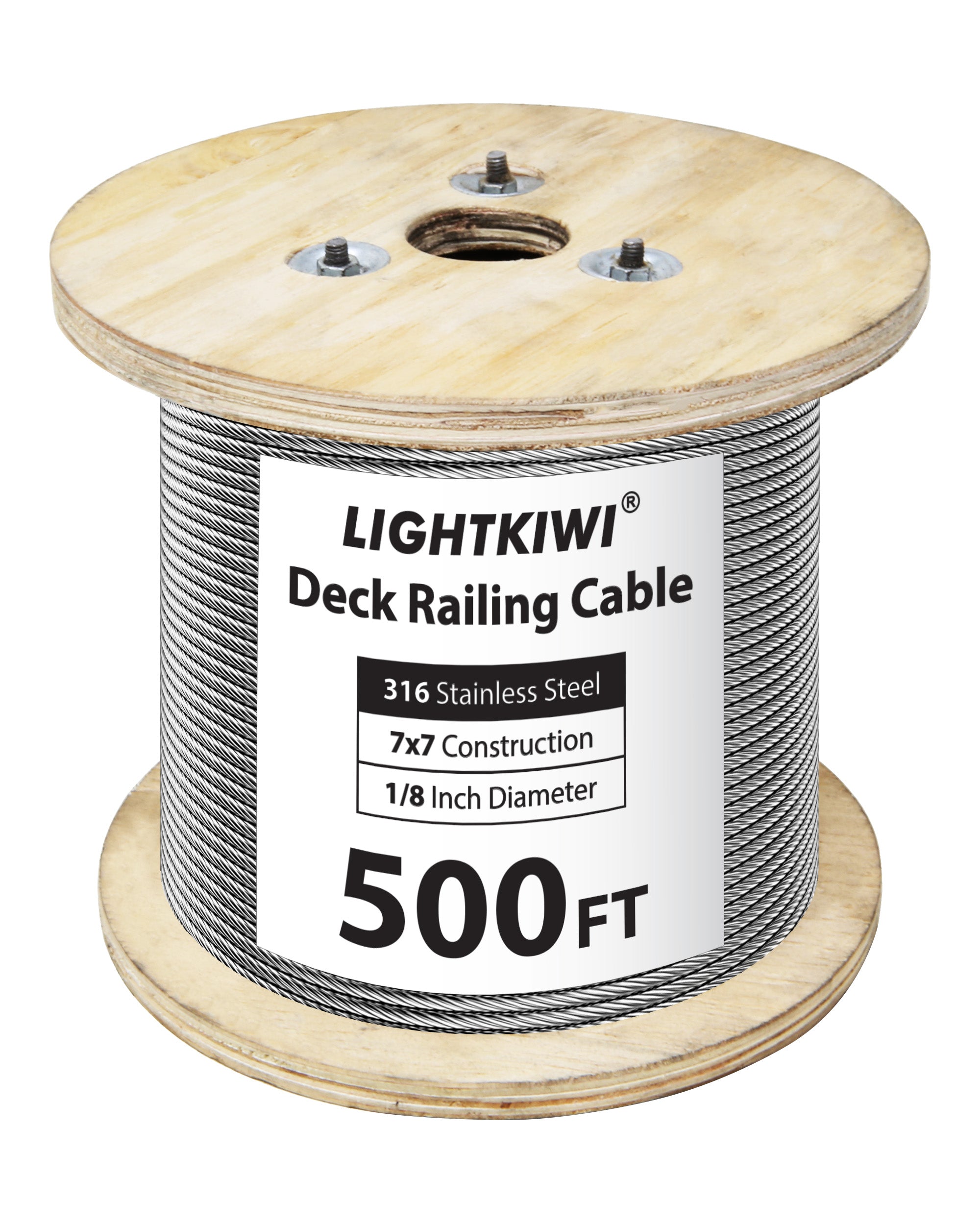
Save $30.00
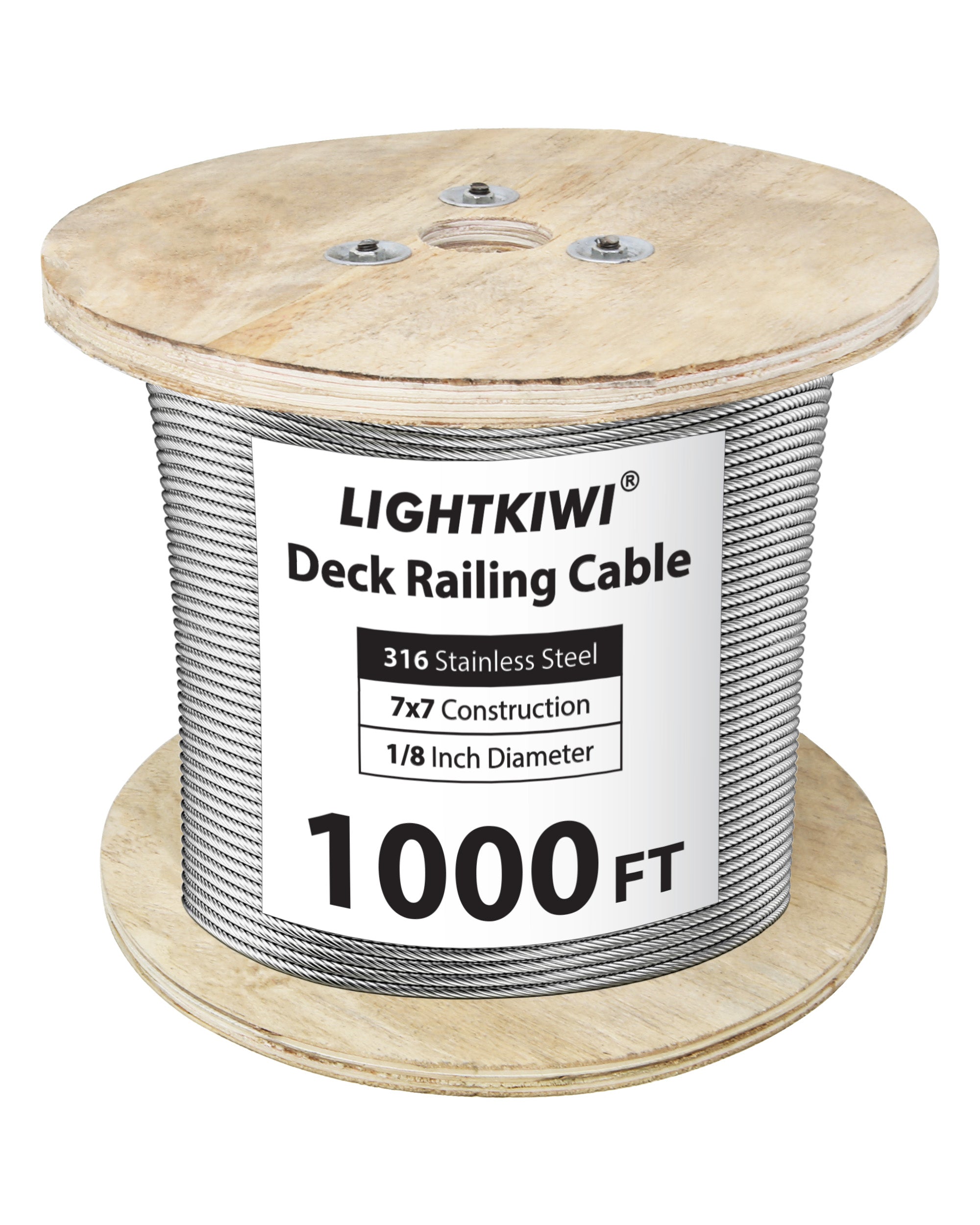
Save $30.00
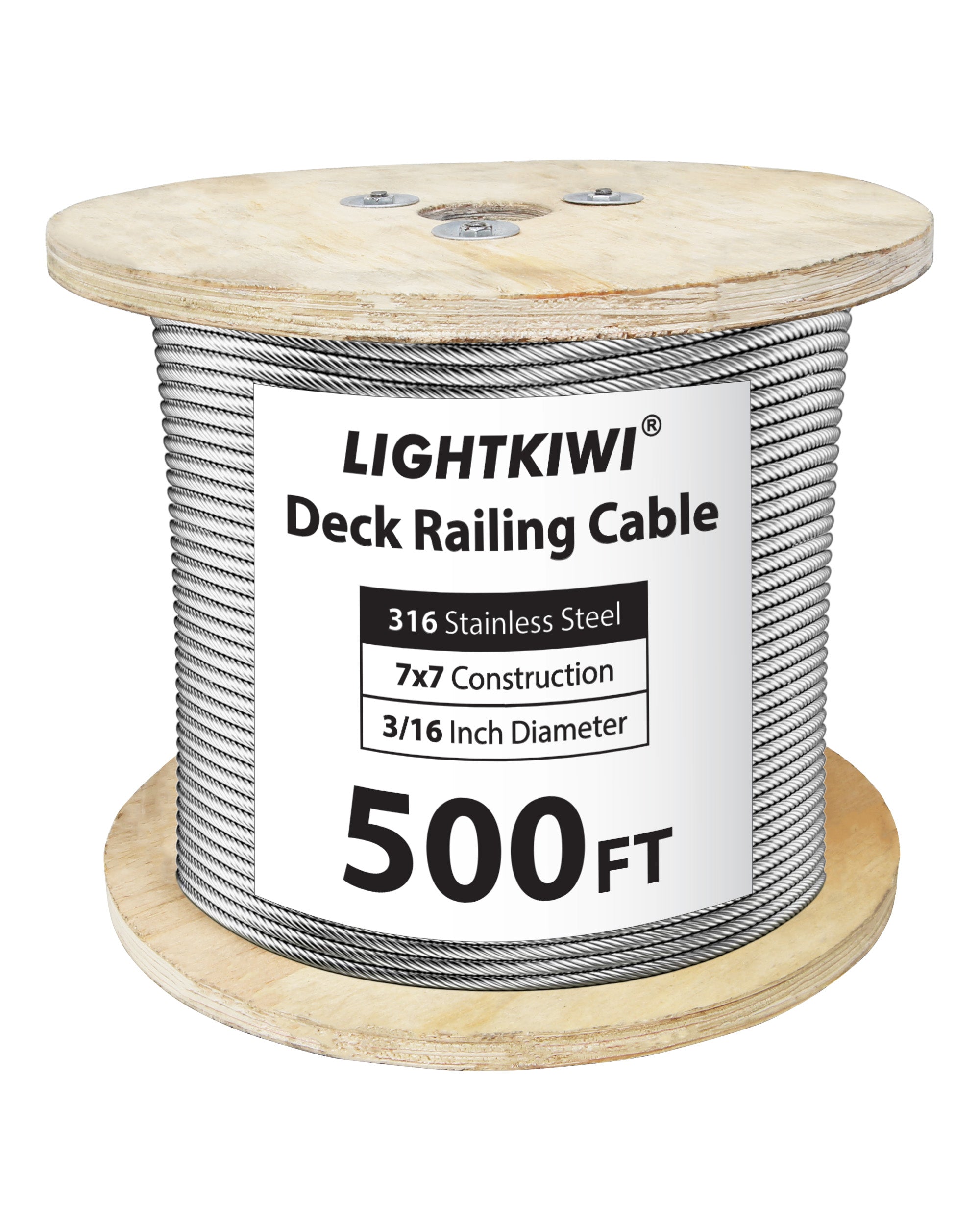
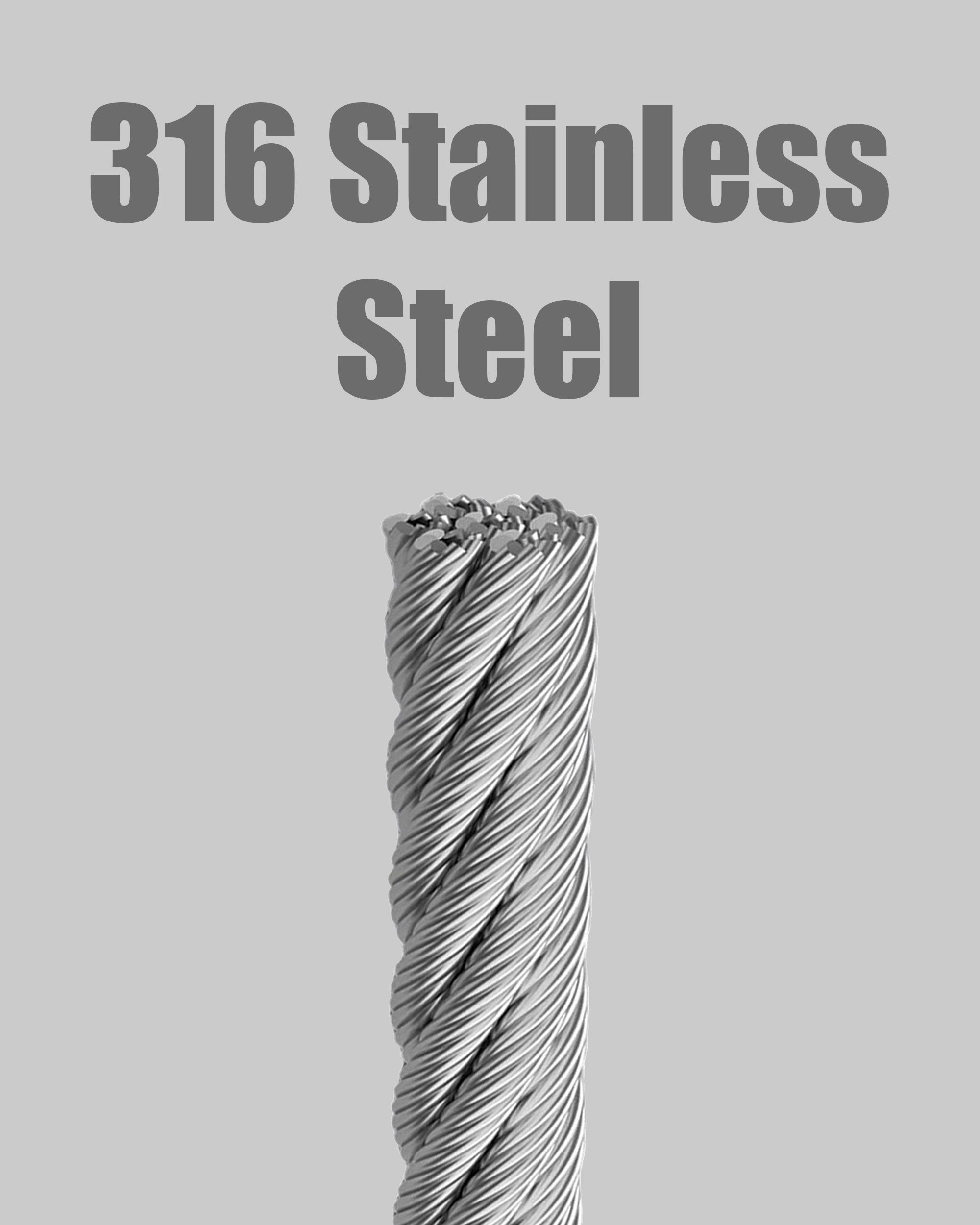
Build a sleek, modern cable railing for your deck, balcony, staircase,or balustrade with Lightkiwi T316 marine-grade stainless steel cable.Available in 1/8" and 3/16" diameters and 500ft or 1000ft spools,with a flexible 7x7 strand construction for easy handling and cornerrouting. T316 stainless provides superior corrosion resistance incoastal, poolside, and high-humidity environments where T304stainless will eventually rust.
1/8" vs 3/16" — Which Diameter Should You Choose?
1/8" cable is the standard choice for most residential decks and staircases. It's the most popular option for good reason:
- Nearly invisible from distances over 7–10 feet, maximizing your view
- Lighter and easier to handle during installation
- Lower cost per foot and compatible with less expensive hardware
- Ideal for metal post systems with standard post spacing
3/16" cable is the upgrade choice for commercial projects,high-traffic areas, and anyone who wants a more substantial feel:
- Slightly more visible — gives the railing a more industrial, statement look
- Better resistance to deflection on longer spans or wide post spacing (5ft or more)
- Recommended for wood post systems, which flex under tension more than metal posts
- Preferred for commercial and multi-family residential applications
For almost all home deck and stair projects, **1/8" is the practical choice**. Choose 3/16" if your posts are spaced over5ft apart, you're using wood posts, or you want a heavier look.
T316 vs T304 Stainless Steel — Why It Matters
All Lightkiwi deck cable is T316 (marine-grade) stainless steel. Here's why that matters:
T304 stainless is a general-purpose grade used in indoor applications. Outdoors, especially near salt air, pools, or in humid climates, T304 will develop rust stains over time —particularly at cut ends and attachment points.
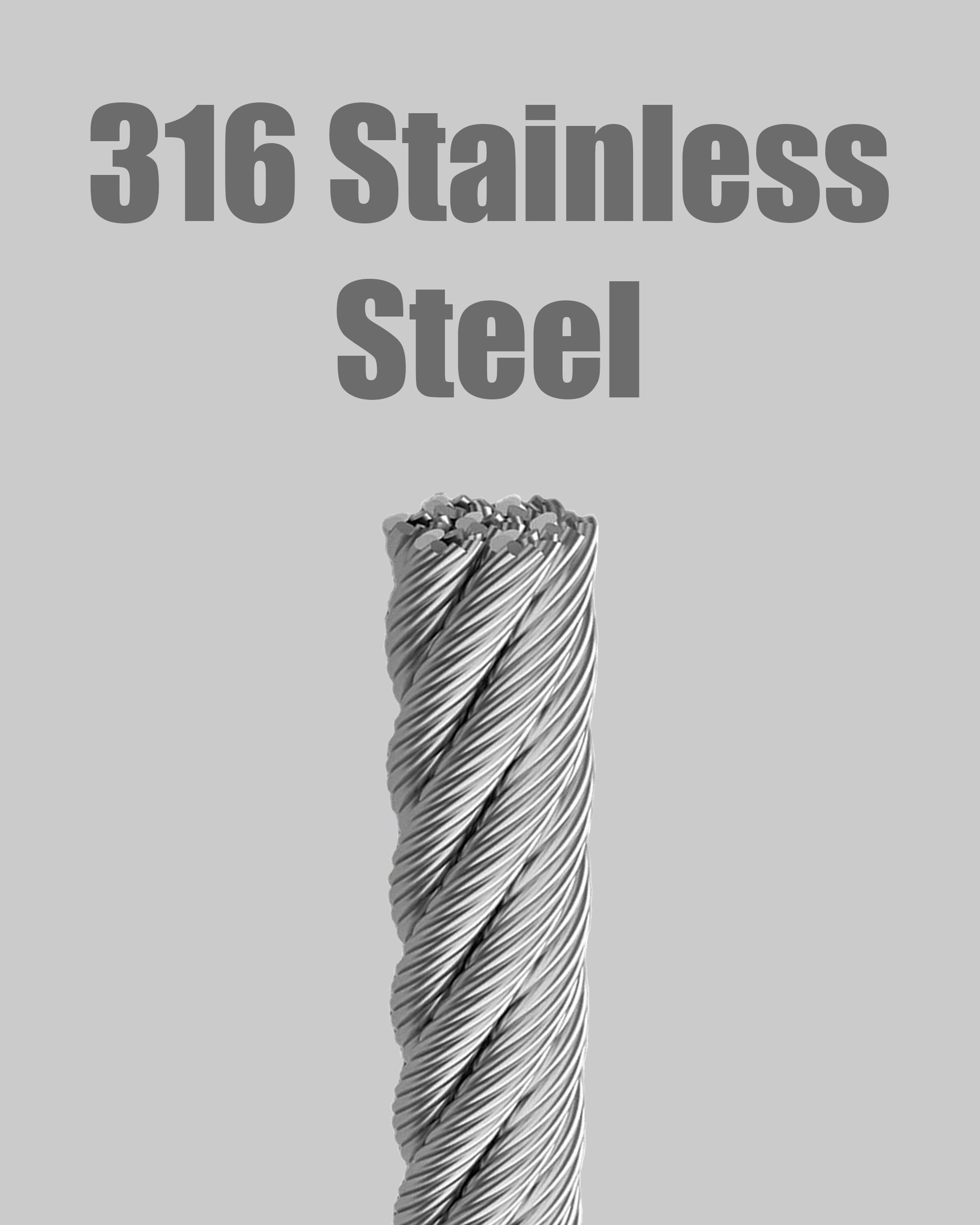
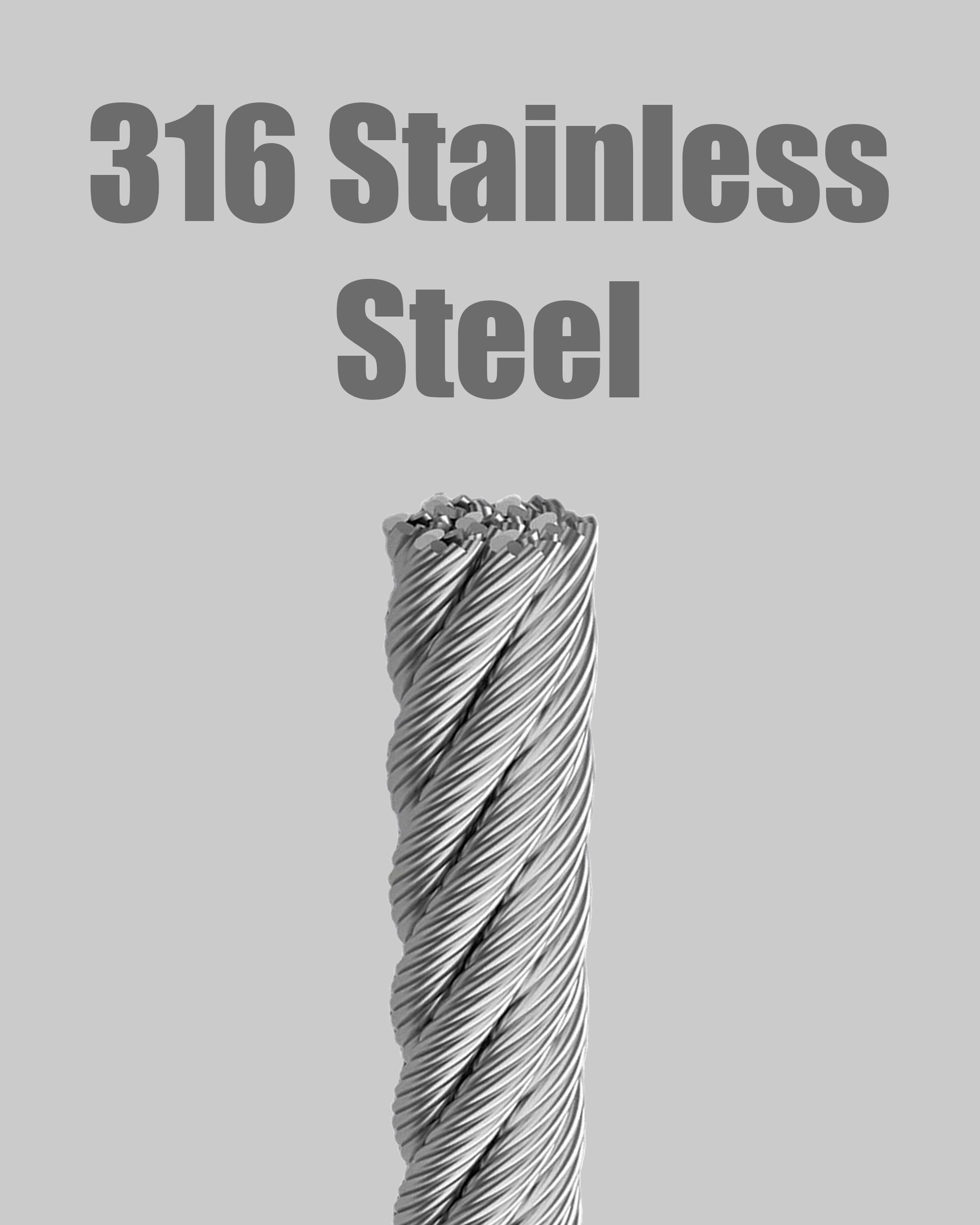
T316 stainless contains molybdenum, which dramatically improves resistance to chloride (salt) corrosion. It's the industry standard for marine, coastal, and outdoor applications where long-term appearance matters. If your deck is within 10 miles of the coast, near a pool, or in a high-humidity climate, T316 is the only grade worth installing.
7x7 vs 1x19 Construction
Most deck cable is sold in two constructions: 7x7 and 1x19.
7x7 (Lightkiwi's construction) consists of 7 groups of 7individual wires twisted together — 49 wires total. The result is a flexible cable that bends easily around corners, routes through intermediate posts with less effort, and is more forgiving to work with during DIY installation.
1x19 consists of a single core with 18 wires around it —stiffer and more resistant to deflection under load, but harder to work with around corners and bends. More common in commercial cable railing systems.
For DIY residential installs, **7x7 is the easier choice**and performs well in all standard residential applications.
How Much Cable Do I Need?
Measure the total linear footage of your railing runs, multiply by the number of cable rows, and add 10–15% for waste and terminations.
Quick estimate:
- Cable rows: most residential decks use 10–14 rows of cable, spaced 3 to 3-1/8 inches on center (required to pass the 4-inch sphere rule under IRC/IBC code)
- A 10ft railing section with 12 rows = 120ft of cable (plus termination allowance)
- A 40ft deck perimeter with 12 rows ≈ 500–550ft of cable
The 500ft spool covers most residential deck projects. The 1000ft spool is ideal for larger decks, wraparound railings, or when you want spare cable on hand.
Building Code Basics
Most US jurisdictions follow IRC (International Residential Code) or IBC (International Building Code) for deck railings. Key requirements to know:
4-inch sphere rule — cable spacing must prevent a 4-inch sphere from passing through. This typically means cables spaced no more than 3 to 3-1/8 inches on center
Guardrail height — minimum 36 inches for decks less than 30 inches above grade; 42 inches for commercial applications
Post spacing — posts should be spaced no more than 4–6 feet apart to control cable deflection
Cable tension — cables should be tensioned to at least 225 lbs to control sag and maintain code-compliant spacing
Always verify requirements with your local building department before installation — local codes may be more restrictive than national standards.
Frequently Asked Questions
What tools and hardware do I need to install cable railing?
Cable railing installation requires termination hardware(threaded studs or swage fittings), tensioners, a wire rope cutter, and a torque wrench or tensioning tool. These are sold separately by hardware suppliers. Lightkiwi suppliesthe cable only.
How far apart should I space my cables?
Space cables no more than 3 inches clear (3-1/8 inches on center) to comply with the 4-inch sphere rule under IRC/IBC building codes. Always verify with your local building department, as some jurisdictions have stricter requirements.
Can I use this cable near the ocean or a pool?
Yes. T316 marine-grade stainless steel is specifically designed for salt-air and chloride environments. It provides significantly better corrosion resistance than T304 stainless in coastal and poolside applications.
How do I cut the cable to length?
Use a wire rope cutter for a clean cut — bolt cutters or angle grinders will fray the end. After cutting, immediately apply tape or a heat-shrink end cap to prevent fraying before installing termination hardware.
Will the cable sag over time?
Some initial tension loss is normal in the first few weeks as the cable seats into the hardware — re-tension as needed. Wood post systems are more prone to cable loosening over time as the wood dries and moves seasonally. Metal postsystems are much more stable. T316 cable itself does not stretch or sag permanently under normal residential loads.
Is 500ft enough for my deck?
For most residential decks (up to 40ft perimeter, 12 cable rows), 500ft is sufficient with some spare. For larger decks,L-shaped or wraparound configurations, or decks with staircases, the 1000ft spool provides coverage without the risk of running short mid-project.
What is the difference between 7x7 and 1x19 cable?
7x7 is more flexible and easier to work with around corners and through posts — the better choice for DIY residential installs. 1x19 is stiffer and resists deflection better under load, favored in commercial applications. For residential decks, 7x7 performs well and is significantly easier to handle.